
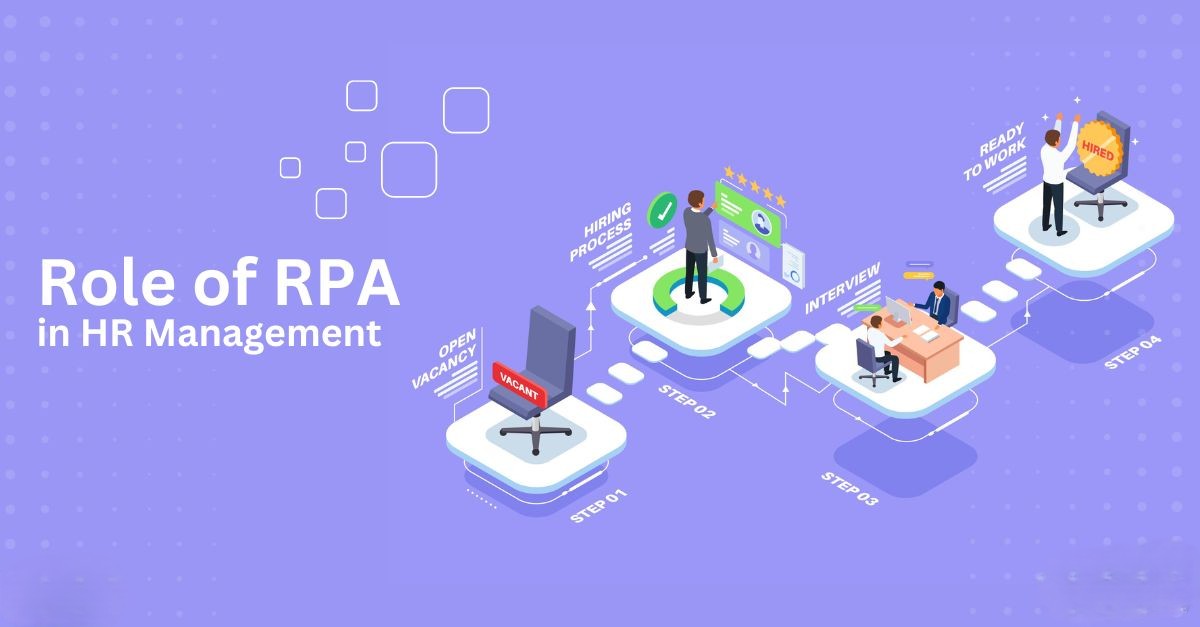
Human Resources teams are often burdened by high-volume, repetitive administrative tasks that distract from strategic employee engagement and talent development. Robotic Process Automation (RPA) offers a powerful solution, streamlining onboarding, payroll processing, and benefits administration to save time and dramatically reduce errors across the entire employee lifecycle.
The Administrative Overload in HR
From new hire paperwork and system provisioning to monthly payroll reconciliation and benefits updates, HR processes typically involve jumping between multiple disparate systems (HRIS, payroll platforms, external benefits portals). These tasks are perfect candidates for automation because they are:
- Rule-based and highly standardized.
- High-volume and time-consuming.
- Vulnerable to human error, which can have significant compliance implications.
Focus Shift:
By automating core administrative functions, HR professionals can re-allocate up to 40% of their time to high-value activities like strategic planning, retention initiatives, and employee counseling.
Key RPA Applications Across the Employee Lifecycle
RPA can be applied at virtually every stage of an employee's journey with the company:
1. Automated Onboarding and Offboarding
Onboarding a new employee involves provisioning access (IT accounts, badges), creating records in multiple systems (HRIS, payroll, security), and sending mandatory compliance documents. RPA bots can trigger all these actions simultaneously upon a hiring manager's approval, cutting the manual setup time from hours to minutes and ensuring compliance steps are never missed. Similarly, offboarding tasks like system access revocation are managed instantly, mitigating security risks.
2. Payroll and Benefits Administration
RPA is critical for ensuring payroll accuracy and timeliness. Bots can collect time card data from various systems, reconcile it with HRIS data for deductions and bonuses, perform cross-system validation checks, and upload the final, validated payroll file to the banking system. For benefits, bots handle enrollment changes, ensuring employee elections are accurately reflected in external vendor systems.
3. Compliance and Reporting
Regulatory reporting (e.g., EEO-1 forms, tax filings) requires accurate data extraction from siloed HR systems. RPA bots are programmed to pull, aggregate, and format this data according to precise legal specifications, significantly improving the speed and integrity of compliance audits.
// Pseudocode for RPA-Driven Onboarding Workflow
function executeNewHireOnboarding(employee_data) {
    // 1. Create User Account in Active Directory (System 1)
    RPA_BOT.inputData('AD_System', employee_data.name, employee_data.email);

    // 2. Create Payroll Record (System 2)
    RPA_BOT.inputData('Payroll_System', employee_data.ssn, employee_data.salary);

    // 3. Notify IT for Equipment Provisioning (System 3)
    RPA_BOT.sendTicket('IT_HELP_DESK', `New laptop needed for ${employee_data.name}`);

    // 4. Enroll in Mandatory Training (System 4)
    RPA_BOT.inputData('LMS_Portal', employee_data.id, 'MandatoryComplianceTraining');

    // 5. Send Welcome Email (System 5)
    RPA_BOT.sendEmail(employee_data.email, "Welcome to the Team!");
}
// This orchestration ensures simultaneous, error-free execution.
Challenges and Best Practices
While the benefits are substantial, successful HR automation relies on best practices:
- Standardization First: Automation works best on highly standardized processes. HR teams must first document and standardize a process before attempting to automate it.
- Maintain Audit Trails: Every action taken by the RPA bot, especially in sensitive areas like payroll, must be logged to a centralized audit system to ensure compliance and easy troubleshooting.
- Prioritize Employee Experience: Automation should enhance the employee experience (e.g., instant system access on day one), not complicate it. The focus remains on making HR processes seamless and less transactional.
Conclusion: HR as a Strategic Partner
RPA is transforming the HR department from a cost center focused on paper-pushing to a strategic partner driving talent acquisition, retention, and development. By outsourcing the digital "heavy lifting" to bots, HR professionals gain the time and data insights needed to focus on human connection, mentorship, and building a thriving corporate culture. Automating the workforce is the first step toward optimizing human potential within the enterprise.